- Flooring
Solid or Engineered Hardwood?
August 19, 2016
Composition & Uniformity
Solid and engineered hardwood floors are both manufactured from real wood – and they may look the same – but what you can’t see makes all the difference.
Solid – Milled from a single piece of genuine hardwood, solid wood planks are covered with a thin, clear protective layer for improved durability. Uniformity of solid hardwood varies depending on the grade, with some grades allowing for multiple knots.
Engineered – Up to 12 layers of plywood are topped with a real hardwood veneer, then bonded together under heat and pressure to produce engineered hardwood flooring. Engineered wood is typically manufactured for optimal uniformity.
Heat, Moisture, & Climate Change Resistance
The location of your new hardwood floor should guide your flooring choice.
Solid – Solid hardwood is a poor choice for any location with high temperatures or excessive moisture. It is prone to expansion, warping, and cupping due to changes in the climate – particularly during extremes in heat, cold, humidity, and precipitation.
Engineered – Unlike solid wood, engineered hardwood won’t warp or cup due to changes in the climate, and it is far more resistant to moisture and heat damage. This makes it the smart wood flooring choice for your kitchen, or in places where the humidity level can vary, such as your basement.
Strength & Stability
Both solid and engineered hardwood floors are designed with durability in mind – with a tough surface that can stand up to even the most active families.
Solid – Solid hardwood floors were originally used to increase the structural strength of a residence, and they still provide better support for your building than engineered wood.
Engineered – Thanks to its multiple layers of construction, engineered hardwood offers greater dimensional stability, increasing its resistance to everyday wear-and-tear, buckling, and rippling.
Installation & Refinishing
Engineered hardwood is easier to install over a wider variety of surfaces than solid wood flooring, but your refinishing options are more limited.
Solid – Solid hardwood flooring may be glued, nailed, or stapled to a wood subfloor. These installations are best left to professionals, since the installer must have enough experience to leave the proper amount of space for expansion and contraction of the wood. Depending on board thickness, solid hardwood can be refinished up to 10 times.
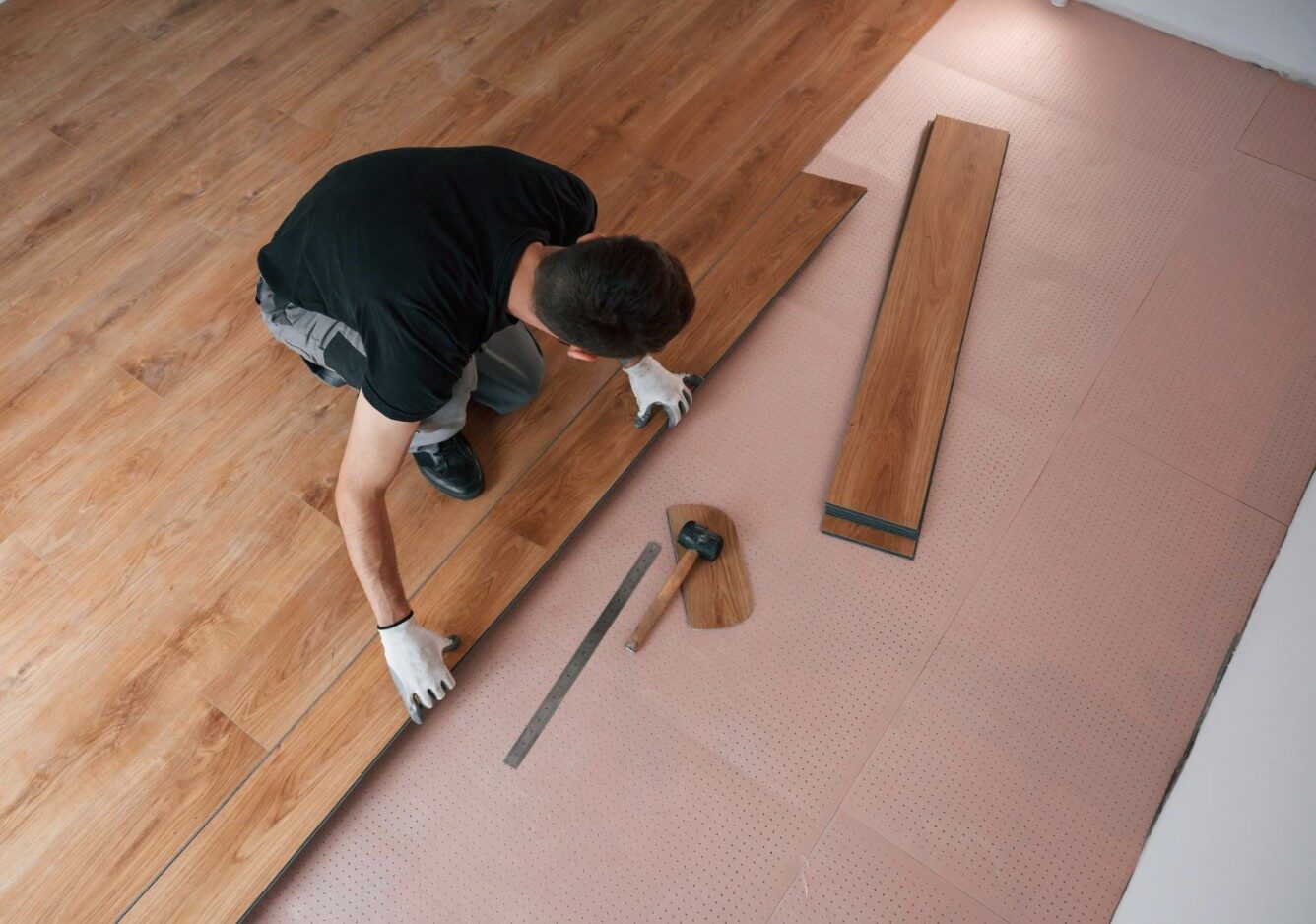
Engineered – Engineered wood floors may be stapled, nailed, or glued down, but it’s also possible to install a floating floor – depending on the product you choose. This allows your wood floor to be installed over virtually any surface, including concrete and radiant heating systems. The hardwood veneer of most engineered wood planks can only withstand refinishing once or twice.
Installing a new hardwood floor is one of the easiest ways to give the appearance and resale value of your home a quick boost. Regardless of whether you choose solid hardwood or engineered planks, you’ll enjoy a beautiful new floor that adds value to your space.